

How to Choose an Agriculture Drone Battery? WES Semi-Solid Smart Battery Solutions
When commercial drone service providers ask how to choose an Agriculture Drone battery, the conversation usually revolves around two metrics: flight time and capacity. While these are undeniably important, they only represent the tip of the iceberg. In the high-stakes, high-frequency environment of crop protection, the true cost of ownership is often hidden in the shadows of operational risks.
A single battery failure in the field can lead to catastrophic equipment loss, while chronic safety hazards can generate massive after-sales and liability costs that quickly wipe out seasonal profits. The industry is currently undergoing a massive technological shift to address these exact pain points. By transitioning to a semi-solid state battery and integrating an intelligent BMS, operators can transform their power source from a vulnerable consumable into a strategic asset that drives cost reduction and operational efficiency.
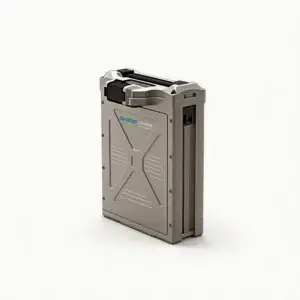
Part One: The Core Demands of Modern Agricultural Aviation
1.1 Safety: The Ultimate Business Insurance
Agricultural environments are notoriously harsh, exposing equipment to corrosive chemicals, high humidity, and extreme temperature fluctuations. Traditional liquid electrolyte batteries are inherently vulnerable in these conditions, prone to swelling, leakage, and thermal runaway under high-stress discharge.
For enterprise operators, mitigating this risk is paramount. The emergence of the semi-solid state battery has fundamentally changed the safety landscape. By utilizing a highly stable solid-liquid composite electrolyte, these batteries exhibit exceptional resistance to thermal runaway. Even under physical impact or extreme heat, they remain stable. For a commercial fleet, this inherent safety acts as an invisible insurance policy, drastically reducing the risk of catastrophic equipment failure and the associated massive after-sales costs.
1.2 Fast Charging: Maximizing Peak Season Efficiency
In agricultural spraying, time is literally money. Every minute a drone spends tethered to a charger is lost acreage. A top-tier Agriculture Drone battery must support high-rate fast charging (e.g., 4C to 5C) without excessive heat generation. This capability allows for rapid turnaround between flights, ensuring continuous field operations during the narrow windows of peak farming seasons.
1.3 Long Cycle Life: Driving Down TCO
Crop protection requires high-intensity, daily operations. A battery that degrades after 300 cycles will destroy profit margins through frequent replacements. Modern commercial fleets demand batteries offering over 800 to 1,000 cycles. A longer lifespan directly translates to a lower Total Cost of Ownership (TCO), protecting the bottom line over the long term.
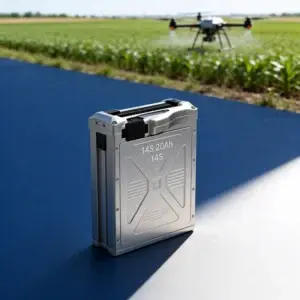
Part Two: The Role of the Smart Battery and Advanced BMS
2.1 Why a Smart Battery is Non-Negotiable
Hardware durability is only half the equation; intelligent software management is the other. A modern smart battery is no longer just a power cell; it is an active participant in flight safety and fleet management.
At the heart of this intelligence is the BMS (Battery Management System). An advanced BMS actively monitors and manages the battery’s health in real-time. Through precision SOX algorithms, it accurately estimates State of Charge (SOC) and State of Health (SOH), preventing unexpected mid-air crashes and optimizing flight paths. Furthermore, active cell balancing ensures all cells charge and discharge evenly, which is critical for extending the overall cycle life and maximizing return on investment.
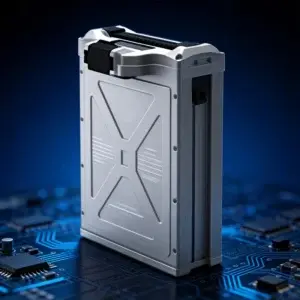
2.2 Turning Battery Investment into Business Profit
Every battery failure in the field requires a technician, a replacement unit, and potential compensation for lost spraying time. By adopting semi-solid state battery technology paired with an intelligent BMS, fleet managers can virtually eliminate spontaneous battery failures.
Operating a commercial drone fleet carries inherent risks. Investing in an Agriculture Drone battery with superior thermal stability and intelligent monitoring is a proactive risk management strategy. It protects your assets, safeguards your operators, and ensures uninterrupted service delivery to your agricultural clients. Ultimately, choosing the right power source is about transforming your battery from a consumable expense into a profit-generating asset.
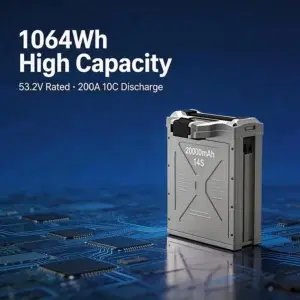
Conclusion: Future-Proofing Your Drone Fleet
The agricultural aviation industry is evolving rapidly, and the power solutions we rely on must evolve with it. By prioritizing safety, longevity, and smart technology, operators can navigate the complexities of commercial crop protection with confidence.
Don’t let battery failures drain your profits. Partner with WES Battery to experience the unmatched safety and efficiency of our semi-solid state battery и smart battery solutions.
Ready to reduce your operational costs and secure your fleet?
- 📞 Телефон: +86-133-5261-3095
- 📧 Электронная почта: mailto:info@wesbattery.com
- 💬 WhatsApp: +86-133-5261-3095
Visit our website to learn more about our smart battery и fast charging solutions for agricultural aviation.