

Introduction: The Power Struggle in the Sky
In the world of high-performance 嗡嗡声 racing and professional aerial cinematography, there is a constant battle between weight, power, and efficiency. For years, standard LIPO (Lithium Polymer) batteries have been the industry standard. However, a new contender has emerged, promising longer flight times and more consistent voltage: the LIHV battery.
If you are a pilot looking to upgrade your setup, understanding the nuances between these technologies is crucial. This guide will break down the chemistry, the performance metrics, and why brands like COOLWINGER are investing heavily in LIHV technology to give pilots the ultimate edge.
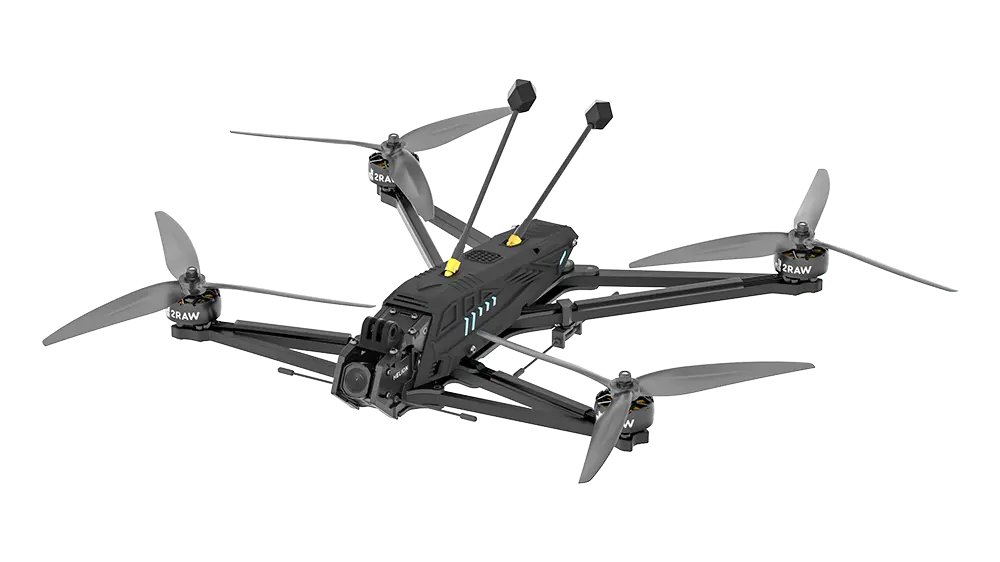
The Science: LIPO vs LIHV Battery
At first glance, a LIPO battery and a LIHV battery might look identical. They often share the same physical dimensions and cell counts (e.g., 4S, 6S). However, the difference lies in the internal chemistry and the voltage specifications.
Standard LIPO Batteries
Traditional LIPO batteries typically have a nominal voltage of 3.7V per cell. When fully charged, they reach a peak of 4.2V per cell. As the battery discharges during flight, the voltage drops steadily. This rapid drop-off can sometimes cause the Electronic Speed Controllers (ESCs) to struggle to maintain consistent power to the motors, leading to a “sag” in performance towards the end of the flight.
High-Voltage LIHV Technology
LIHV battery technology modifies the cathode material to allow for a higher nominal voltage—typically 3.8V per cell—while maintaining the same 4.2V full charge limit.
| 特点 | Standard LIPO | LIHV battery |
|---|---|---|
| 额定电压 | 3.7V per cell | 3.85V per cell |
| Peak Voltage | 4.2V per cell | 4.45V per cell |
| Voltage Sag | Higher voltage drop | Reduced voltage drop |
| Energy Density | Standard | Higher |
The result? A 嗡嗡声 equipped with a LIHV battery starts the flight with a higher “floor” of voltage. This means the motors receive a stronger, more stable signal for a longer duration, resulting in more efficient power usage and often, longer flight times.
🚀 Why Pilots Are Switching to LIHV
The shift toward LIHV battery technology isn’t just a marketing gimmick; it is driven by tangible performance gains.
1. Extended Flight Time
Because the voltage curve of an LIHV battery is flatter than that of a standard LIPO, the motors do not have to work as hard to draw the same amount of current. This efficiency translates directly into extended air time. For a commercial 嗡嗡声 operator, an extra minute or two of flight can mean the difference between capturing the perfect shot and having to land prematurely.
2. Cooler Operation
Efficiency also equals heat management. When a battery struggles to maintain voltage, it generates heat. Excessive heat degrades battery life and can damage sensitive electronics. LIHV battery packs, by providing power more efficiently, tend to run cooler than their standard LIPO counterparts under the same load.
3. Better Motor Efficiency
Modern brushless motors are designed to operate optimally within specific voltage ranges. The higher nominal voltage of the LIHV battery keeps the motor within its “sweet spot” for a longer period, reducing the need for the ESC to compensate for dropping voltage.
🏆 The COOLWINGER Advantage
When investing in high-performance batteries, reliability is non-negotiable. This is where the COOLWINGER brand stands out in the crowded market.
COOLWINGER has recognized the potential of LIHV battery technology and has engineered their cells to maximize the benefits of high voltage without compromising safety.
- Precision Engineering: COOLWINGER batteries feature advanced cell balancing to ensure that every cell in the pack performs uniformly. This is critical for maintaining the stability of a high-voltage system.
- Durability: Designed for the rigors of 嗡嗡声 racing and heavy-lift cinematography, COOLWINGER packs are wrapped in high-grade shrink wrap that protects against punctures and impacts.
- Consistency: One of the biggest complaints about generic LIPO batteries is inconsistency between charges. COOLWINGER ensures that every batch of LIHV battery packs delivers the same “punch” flight after flight.
Expert Tip: Always use a charger with a specific “LIHV” or “LifePo4” (often compatible) charging profile when charging high-voltage batteries. Do not use a standard LIPO charge profile, as this can overcharge the cells and create a safety hazard.
📊 Comparison: LIPO vs LIHV Battery for Your Drone
To help you decide which technology is right for your setup, let’s compare them directly.
The Standard LIPO: The Budget Choice
If you are a beginner or on a tight budget, a standard LIPO battery is still a solid choice. They are widely available, cheaper to replace, and compatible with virtually every charger and 嗡嗡声 on the market. However, you may notice a “soft” feeling in your controls towards the end of the battery cycle as the voltage drops.
The LIHV Battery: The Performance Choice
If you are a competitive racer or a professional pilot, the LIHV battery is the superior option. The higher nominal voltage provides a more aggressive throttle response and maintains that response until the battery is nearly depleted. Brands like COOLWINGER have optimized this technology to deliver maximum power density in a lightweight package.
🛠️ Maintenance and Safety Tips
Regardless of whether you choose a standard LIPO or a high-performance LIHV battery, proper maintenance is key to longevity and safety.
- Storage Voltage: Never leave a fully charged 嗡嗡声 battery sitting on your desk for days. For long-term storage, discharge your LIPO 或 LIHV battery to the storage voltage (approximately 3.8V per cell for LIHV, 3.8V is often safe for LIPO too, though 3.85V is common).
- Discharge Rates: Always check the C-rating of your battery. Pushing a low-C LIPO on a high-demand 嗡嗡声 can lead to puffing and failure. COOLWINGER batteries are rated for high continuous discharge, making them safe for aggressive flight styles.
- Temperature Monitoring: If your battery feels hot to the touch after a flight, you are likely drawing too much current. Let it cool down before the next flight.
结论
The debate between LIPO 和 LIHV battery technology is really a debate about efficiency. While standard LIPO batteries will continue to serve the entry-level market, the future belongs to high-voltage solutions. For pilots seeking every ounce of performance, the LIHV battery offers a distinct advantage in flight time and power consistency.
When making the switch, consider the COOLWINGER brand for reliable, high-performance cells that are built to handle the stress of modern 嗡嗡声 applications. Upgrade your power source, and you might be surprised at how much further your machine can fly.
External Resources
- Battery University: Understanding Lithium-Ion
- Drone Racing League Tech Specs batteries, known for their lightweight design and high discharge rates, are favoured for their ability to provide immediate power, crucial for competitive drone racing. Conversely, LIHV batteries offer enhanced energy density, resulting in longer flight durations and improved performance under demanding conditions. For those seeking to maximise their drone’s capabilities, incorporating high-quality cells from reputable manufacturers such as COOLWINGER can significantly elevate your flying experience. Engaging with external resources, including Battery University and the Drone Racing League tech specifications, can further inform your decision-making