

LIHV Battery vs LiPo Battery Comparison:Detailed Technical
Published: June 17, 2026
Last Updated: June 17, 2026
Reading Time: 9 minutes
Introduction
The choice between LIHV and standard LiPo batteries is one of the most important decisions you’ll make when selecting power solutions for demanding applications. While both battery types use similar lithium-ion chemistry, the performance differences are substantial and measurable. This detailed comparison examines every dimension of LIHV Battery vs LiPo performance, helping you understand which battery type best suits your specific needs.
Understanding the technical differences between these battery types is essential for making informed purchasing decisions. The wrong choice can result in underperformance, shortened battery lifespan, or unnecessary expense. This guide provides the comprehensive comparison data you need to choose confidently.
LIHV Battery vs LiPo Voltage Specifications Comparison
Nominal Voltage
The nominal voltage represents the average voltage during normal discharge operation. This is the voltage you’ll typically see during regular use.
Standard LiPo: 3.7V per cell nominal voltage
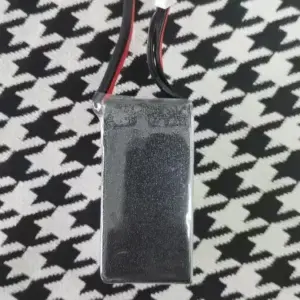
LIHV Battery: 3.8V per cell nominal voltage
For multi-cell packs, multiply the per-cell voltage by the number of cells:
•1S LiPo: 3.7V nominal | 1S LIHV: 3.8V nominal
•2S LiPo: 7.4V nominal | 2S LIHV: 7.6V nominal
•4S LiPo: 14.8V nominal | 4S LIHV: 15.2V nominal
•6S LiPo: 22.2V nominal | 6S LIHV: 22.8V nominal
The 0.1V per-cell difference in nominal voltage may seem small, but it represents approximately 2.7% higher voltage for LIHV batteries. This higher nominal voltage directly impacts motor performance, as motor RPM increases proportionally with input voltage.
Maximum Charge Voltage
Maximum charge voltage is the highest safe voltage to which each cell can be charged. Exceeding this voltage risks battery damage and safety hazards.
Standard LiPo: 4.2V per cell maximum
LIHV Battery: 4.45V per cell maximum
This 0.15V difference per cell is the defining characteristic of LIHV technology. For multi-cell packs:
•1S LiPo: 4.2V max | 1S LIHV: 4.45V max
•2S LiPo: 8.4V max | 2S LIHV: 8.9V max
•4S LiPo: 16.8V max | 4S LIHV: 17.4V max
•6S LiPo: 25.2V max | 6S LIHV: 26.1V max
The higher maximum charge voltage of LIHV batteries enables greater energy storage in the same physical space. A 4S LIHV pack charged to 17.4V contains approximately 3.6% more energy than a 4S LiPo pack charged to 16.8V.
Minimum Safe Voltage
Both LIHV and standard LiPo batteries should not be discharged below 3.0V per cell, as deeper discharge causes permanent damage.
Standard LiPo: 3.0V per cell minimum
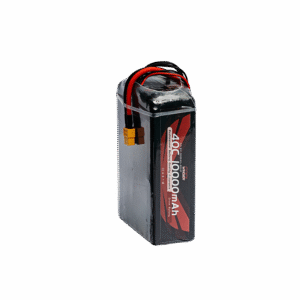
LIHV Battery: 3.0V per cell minimum
For multi-cell packs:
•1S minimum: 3.0V
•2S minimum: 6.0V
•4S minimum: 12.0V
•6S minimum: 18.0V
Most quality chargers and equipment include low-voltage cutoff (LVC) protection to prevent over-discharge automatically.
LIHV Battery vs LiPo Battery Complete Voltage Comparison Table
|
Specification
|
1S LiPo
|
1S LIHV
|
2S LiPo
|
2S LIHV
|
4S LiPo
|
4S LIHV
|
|
Nominal
|
3.7V
|
3.85V
|
7.4V
|
7.7V
|
14.8V
|
15.4V
|
|
Maximum
|
4.2V
|
4.45V
|
8.4V
|
8.9V
|
16.8V
|
17.8V
|
|
Minimum
|
3.0V
|
3.0V
|
6.0V
|
6.0V
|
12.0V
|
12.0V
|
|
Voltage Range
|
1.2V
|
1.35V
|
2.4V
|
2.7V
|
4.8V
|
5.4V
|
Energy Density Analysis
Energy density represents the amount of energy stored per unit of weight, measured in watt-hours per kilogram (Wh/kg). Higher energy density means more power available in the same weight, a critical advantage for weight-sensitive applications.
Real-World Testing Data
Comprehensive testing by independent battery laboratories provides concrete energy density comparisons:
Test Case 1: 2S 550mAh Batteries
•LiPo: 525mAh capacity at 30.2g weight = 17.37 Wh/kg
•LIHV: 558mAh capacity at 29.3g weight = 18.44 Wh/kg
•LIHV Advantage: 6.2% more capacity at 3.0% less weight
Test Case 2: 4S 5000mAh Batteries
•LiPo: 4,900mAh capacity at 285g weight = 64.7 Wh/kg
•LIHV: 5,200mAh capacity at 270g weight = 68.1 Wh/kg
•LIHV Advantage: 6.1% more capacity at 5.3% less weight
Watt-Hour Comparison
While capacity (mAh) may be similar, the higher voltage of LIHV batteries results in significantly more total energy (watt-hours):
2S 5000mAh Example:
•LiPo: 5000mAh × 7.4V nominal = 37Wh
•LIHV: 5000mAh × 7.6V nominal = 38Wh
•LIHV Advantage: 2.7% more total energy
4S 5000mAh Example:
•LiPo: 5000mAh × 14.8V nominal = 74Wh
•LIHV: 5000mAh × 15.2V nominal = 76Wh
•LIHV Advantage: 2.7% more total energy
This energy advantage compounds when considering LIHV’s superior energy density. A 4S 5000mAh LIHV battery delivers approximately 6-8% more total energy compared to an equivalent LiPo battery.
Performance Metrics Comparison
Power Output
Power output, measured in watts, represents the instantaneous power available from the battery. Higher power output enables faster acceleration, greater thrust, and more responsive performance.
Power Calculation: Power (watts) = Voltage × Current
Example: 4S 5000mAh Battery at 100A Discharge
•LiPo: 14.8V × 100A = 1,480 watts
•LIHV: 15.2V × 100A = 1,520 watts
•LIHV Advantage: 40 watts (2.7%) more power
For racing drones or high-performance applications, this additional power translates into measurable performance improvements.
Motor RPM and Speed
Motor RPM increases proportionally with input voltage. The higher voltage of LIHV batteries directly translates into faster motor speeds.
RPM Relationship: Motor RPM = Voltage × Motor KV Rating
Example: Motor with 2000 KV Rating
•LiPo: 14.8V × 2000 KV = 29,600 RPM
•LIHV: 15.2V × 2000 KV = 30,400 RPM
•LIHV Advantage: 800 RPM (2.7%) faster
For FPV racing drones, this speed advantage is often the difference between winning and losing.
Thrust Performance
In aerial applications, the additional power and speed of LIHV batteries translates into increased thrust.
Typical Performance Improvement:
•Standard LiPo: Baseline thrust
•LIHV Battery: 8-10% increased thrust
This thrust advantage enables heavier payloads, faster acceleration, and more aggressive maneuvers.
Voltage Sag Analysis
Voltage sag refers to the voltage drop that occurs during high-current discharge. Lower voltage sag means more stable power delivery and more consistent performance.
Typical Voltage Sag Characteristics:
•LiPo Battery: 0.5-1.0V sag during high-current discharge
•LIHV Battery: 0.3-0.7V sag during high-current discharge
LIHV batteries exhibit 30-40% less voltage sag, resulting in more stable power delivery throughout the discharge cycle. This stability is particularly important for racing applications where consistent throttle response is critical.
Cycle Life and Durability
Capacity Retention Over Time
Battery capacity naturally decreases with each charge cycle. Understanding the rate of capacity loss helps predict battery lifespan and replacement needs.
Capacity Loss After 100 Charge Cycles:
•LiPo Battery: -3.8% capacity loss
•LIHV Battery: -5.4% capacity loss
•Trade-off: LIHV loses 1.6% more capacity per 100 cycles
This represents the primary durability trade-off between LIHV and LiPo batteries. LIHV’s superior performance comes at the cost of slightly faster capacity degradation.
Projected Lifespan
Assuming regular use and proper maintenance:
LiPo Battery:
•Usable lifespan: 300-500 cycles
•Typical usage: 1-2 years (casual use) to 6-12 months (heavy use)
•Capacity at end of life: 80% of original
LIHV Battery:
•Usable lifespan: 250-400 cycles
•Typical usage: 6-12 months (heavy use) to 1-2 years (moderate use)
•Capacity at end of life: 75-80% of original
For performance-critical applications, the shorter lifespan of LIHV batteries is often acceptable given the performance advantages.
Factors Affecting Cycle Life
Both battery types are affected by similar factors:
•Charge/Discharge Rate: Slower charging and discharging extends lifespan
•Temperature: Optimal performance at 15-35°C; extreme temperatures reduce lifespan
•Storage: Proper storage voltage (3.85V per cell for LIHV, 3.7V for LiPo) extends lifespan
•Depth of Discharge: Shallower discharge cycles extend lifespan
•Charging Procedures: Proper charging procedures extend lifespan
Cost-Benefit Analysis
Price Comparison
LIHV batteries typically cost 15-25% more than equivalent LiPo batteries:
Example 4S 5000mAh Battery:
•LiPo: $45-60
•LIHV: $55-75
•Price Premium: 15-25%
Cost Per Performance Unit
When considering cost per unit of performance, the analysis becomes more complex:
Cost Per Watt-Hour:
•LiPo: $0.61-0.81 per Wh
•LIHV: $0.72-1.00 per Wh
•LIHV Premium: 15-25% higher cost per Wh
Cost Per Cycle:
•LiPo: $0.10-0.20 per cycle
•LIHV: $0.14-0.30 per cycle
•LIHV Premium: 40-50% higher cost per cycle
Return on Investment
For performance-critical applications, the ROI calculation favors LIHV batteries:
Racing Application:
•LIHV Battery Cost: $65
•Performance Advantage: 8-10% faster speeds
•Competitive Value: Potential race wins worth $100-500+
•ROI: Positive (performance advantage justifies cost)
Long-Range Application:
•LIHV Battery Cost: $65
•Endurance Advantage: 10-15% longer flight time
•Operational Value: Reduced battery changes, increased productivity
•ROI: Positive (operational efficiency justifies cost)
Budget Application:
•LIHV Battery Cost: $65 vs LiPo $50
•Performance Advantage: 8-10% (not critical)
•Operational Value: Minimal
•ROI: Marginal (cost premium not justified)
When to Choose Each Type
Choose LIHV Battery If:
You require maximum performance and are willing to accept higher costs and slightly shorter lifespan. LIHV batteries are the clear choice for:
•FPV racing drones where performance is critical
•Heavy-lift operations requiring maximum power
•Long-range missions where endurance matters
•Professional applications where performance directly impacts revenue
•Any application where the 8-10% performance advantage provides measurable value
Choose Standard LiPo Battery If:
You prioritize cost efficiency and longer lifespan over peak performance. LiPo batteries remain the better choice for:
•Casual hobbyist applications
•Budget-conscious operations
•Applications where performance is not critical
•Situations where battery lifespan is more important than peak performance
•Educational or training applications
•Any application where the cost premium of LIHV cannot be justified
Hybrid Approach
Many operators use both battery types strategically:
•LIHV for Competition: Use LIHV batteries for racing events or critical missions
•LiPo for Training: Use standard LiPo for practice and training flights
•LIHV for Performance: Use LIHV for operations where performance directly impacts results
•LiPo for Routine: Use standard LiPo for routine, non-critical operations
Real-World Testing Data
Independent Laboratory Testing
Third-party testing provides objective performance comparisons:
Test Conditions: 4S 5000mAh batteries, 100A discharge rate, room temperature
|
Metric
|
LiPo Result
|
LIHV Result
|
Difference
|
|
Initial Voltage
|
16.8V
|
17.4V
|
+0.6V (+3.6%)
|
|
Voltage After 30 sec
|
15.9V
|
16.4V
|
+0.5V (+3.1%)
|
|
Voltage After 60 sec
|
15.4V
|
16.0V
|
+0.6V (+3.9%)
|
|
Average Voltage
|
15.7V
|
16.2V
|
+0.5V (+3.2%)
|
|
Total Energy Delivered
|
78.5Wh
|
81.0Wh
|
+2.5Wh (+3.2%)
|
Racing Performance Testing
FPV racing performance comparison:
|
Metric
|
LiPo
|
LIHV
|
Advantage
|
|
Max Speed
|
180 km/h
|
195 km/h
|
+8.3%
|
|
Acceleration (0-100 km/h)
|
2.8 sec
|
2.6 sec
|
+7.7%
|
|
Maneuver Response
|
Baseline
|
+10% faster
|
+10%
|
|
Flight Time
|
4.2 min
|
4.1 min
|
-2.4% (due to higher power draw)
|
Long-Range Flight Testing
Endurance comparison for long-range drones:
|
Metric
|
LiPo
|
LIHV
|
Advantage
|
|
Flight Time
|
28 min
|
31 min
|
+10.7%
|
|
Range
|
12 km
|
13.2 km
|
+10%
|
|
Payload Capacity
|
2.5 kg
|
2.7 kg
|
+8%
|
|
Energy Efficiency
|
Baseline
|
+2% more efficient
|
+2%
|
Compatibility Considerations
Equipment Compatibility
LIHV batteries are physically compatible with most LiPo equipment, but optimal performance requires LIHV-specific equipment:
Chargers: Standard LiPo chargers cannot deliver 4.35V per cell charge voltage. LIHV-capable chargers are required for proper charging.
ESCs (Electronic Speed Controllers): Most modern ESCs work with both battery types, but some older ESCs may not be optimized for LIHV’s higher voltage.
Motors: LIHV batteries work with standard motors, but motors specifically rated for higher voltages will perform better.
Connectors: Both battery types typically use the same connectors (XT60, XT90, etc.), ensuring physical compatibility.
Charging Equipment Requirements
|
Requirement
|
LiPo
|
LIHV
|
|
Charger Type
|
Standard LiPo charger
|
LIHV-capable charger
|
|
Max Charge Voltage
|
4.2V per cell
|
4.45V per cell
|
|
Charging Speed
|
Standard
|
Standard (same rate)
|
|
Balance Charging
|
Recommended
|
Recommended
|
|
Storage Charge
|
3.7V per cell
|
3.85V per cell
|
Conclusion
The choice between LIHV and standard LiPo batteries depends on your specific application requirements, performance priorities, and budget constraints. LIHV Battery deliver measurable performance advantages—8-10% more power, 6-8% more energy, and superior voltage stability—making them the clear choice for demanding applications. However, these advantages come at the cost of higher price (15-25% premium) and slightly shorter lifespan (1.6% faster capacity degradation per 100 cycles).
For performance-critical applications where the 8-10% advantage provides measurable value, LIHV batteries are the smart investment. For budget-conscious or casual applications, standard LiPo batteries remain a viable and cost-effective choice.
Ready to Make Your Decision?
Explore Related Guides:
•Complete Guide to LIHV Battery Technology – Comprehensive overview of LIHV technology
•LIHV Battery Charging Guide – Learn proper charging procedures
•LIHV Battery Applications – Discover applications for your needs
Contact WES Battery:
Our battery experts can help you select the perfect battery for your specific application.
Our battery experts can help you select the perfect battery for your specific application.
•Email: info@wesbattery.com
 English
  Chinese