

What are the requirements for battery cells in the power bank industry under the CCC certification for power bank in 2026? What are the impacts?
The year 2026 marks a watershed moment for the portable energy storage industry. With the official release of the mandatory national standard GB 47372-2026 (“Mobile Power Supply Safety Technical Specification”) and the full implementation of strict CCC (China Compulsory Certification) enforcement, the era of “wild growth” for power banks is over.
Understanding the CCC certification for power bank will be crucial for manufacturers looking to succeed in this evolving market.
For brands and manufacturers, this isn’t just about compliance—it’s about survival and reputation. The new regulations place unprecedented demands on the core component: the battery cell. At WES Battery, we understand that meeting these standards requires more than just passing a test; it requires a fundamental shift in cell chemistry and structural design.
The 2026 Mandate: Decoding GB 47372-2026
The new standard moves beyond general safety checks to address specific, high-risk failure modes. For battery cell manufacturers, three critical requirements have emerged as the new baseline for CCC certification for power bank:
- The Needle Penetration Test: This is the most significant hurdle. Cells must withstand being pierced by a steel needle without exploding or catching fire. This simulates an internal short circuit—the leading cause of catastrophic battery fires.
- Cycle Aging & Lithium Plating: Cells must demonstrate stability after 300+ charge cycles, preventing lithium plating that can lead to internal shorts over time.
- Traceability & Smart Management: Every power bank must have a unique “ID,” and cells must support smart BMS monitoring for voltage and temperature anomalies.
Consumer Trends vs. Safety Risks
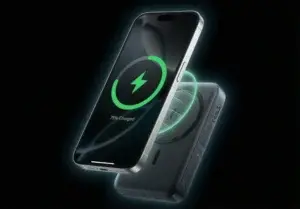
Modern consumers demand devices that are thinner, lighter, and faster. They want magnetic charging power banks that snap onto their phones and ultra-slim packs that disappear into a pocket. However, these form factors increase energy density, which historically increases risk.
WES Battery has engineered solutions that turn these risks into competitive advantages, ensuring your products meet the power bank battery cell requirements of 2026 without sacrificing performance.
1. Surviving the “Needle Penetration” Test
Traditional liquid electrolyte cells are prone to thermal runaway when punctured. To pass the rigorous needle penetration test battery standards required for CCC certification, WES utilizes advanced semi-solid state and high-safety polymer technologies.
Our cells are designed to resist internal short circuits. Even in the event of physical trauma or manufacturing defects, our chemistry prevents the rapid heat buildup that leads to fire. This ensures that your brand never has to face a recall due to safety failures.
2. Enabling Slim & Magnetic Designs
The rise of MagSafe-style accessories requires cells that are not only safe but also physically versatile. Standard cylindrical cells (like 18650s) are often too bulky or heavy for modern magnetic chargers.
WES provides high-density pouch cells specifically optimized for magnetic charging power bank 应用程序。.
- Thinness: Our pouch cells can be manufactured in ultra-thin profiles, allowing for sleek, card-sized power banks.
- Heat Management: Magnetic charging generates significant heat. Our cells feature low internal resistance and superior thermal dissipation, preventing the “hot phone” issue that frustrates users and degrades battery health.
3. Supporting Fast Charge/Discharge
The new standards require robust protection against overcharging. However, users still expect rapid energy replenishment. WES cells support high-rate charging protocols (PD/QC) while maintaining a stable voltage curve. This means your power bank can charge a device from 0% to 50% in minutes without triggering the over-voltage protection mechanisms mandated by the new GB standards.
The Business Case: Safety is Cost Reduction
Many manufacturers view the new GB 47372-2026 standards as a cost burden. We view it differently. Using compliant, high-quality cells is actually a strategy for cost reduction and efficiency increase.
- Reducing After-Sales Costs: A single safety incident can result in thousands of returns, shipping costs, and potential legal liabilities. By using WES cells that exceed the needle penetration and cycle life requirements, you effectively insure your product against these massive hidden costs.
- Brand Equity: In 2026, the “CCC Mark” will be a primary purchasing factor for consumers. Marketing your power bank as “GB 47372-2026 Compliant” builds immediate trust.
- Market Access: Without these certified cells, your products cannot be sold on major e-commerce platforms or carried on flights.
Summary
The 2026 CCC certification is not just a regulatory hurdle; it is a filter that separates premium brands from low-quality commodities. By partnering with WES Battery, you gain access to power bank battery cells that are pre-engineered to pass the needle penetration test, support magnetic and fast-charging formats, and ultimately protect your bottom line.
Don’t let safety risks compromise your business. Choose WES 电池—powering the future safely.
 English
  Chinese