The Complete Guide to Drone Batteries.
Selection, Specs, Compliance & OEM.
From LiPo vs semi-solid chemistry to LiHV voltage, C-rate, UN38.3 compliance and custom OEM — everything you need to spec, source, and scale industrial UAV power.
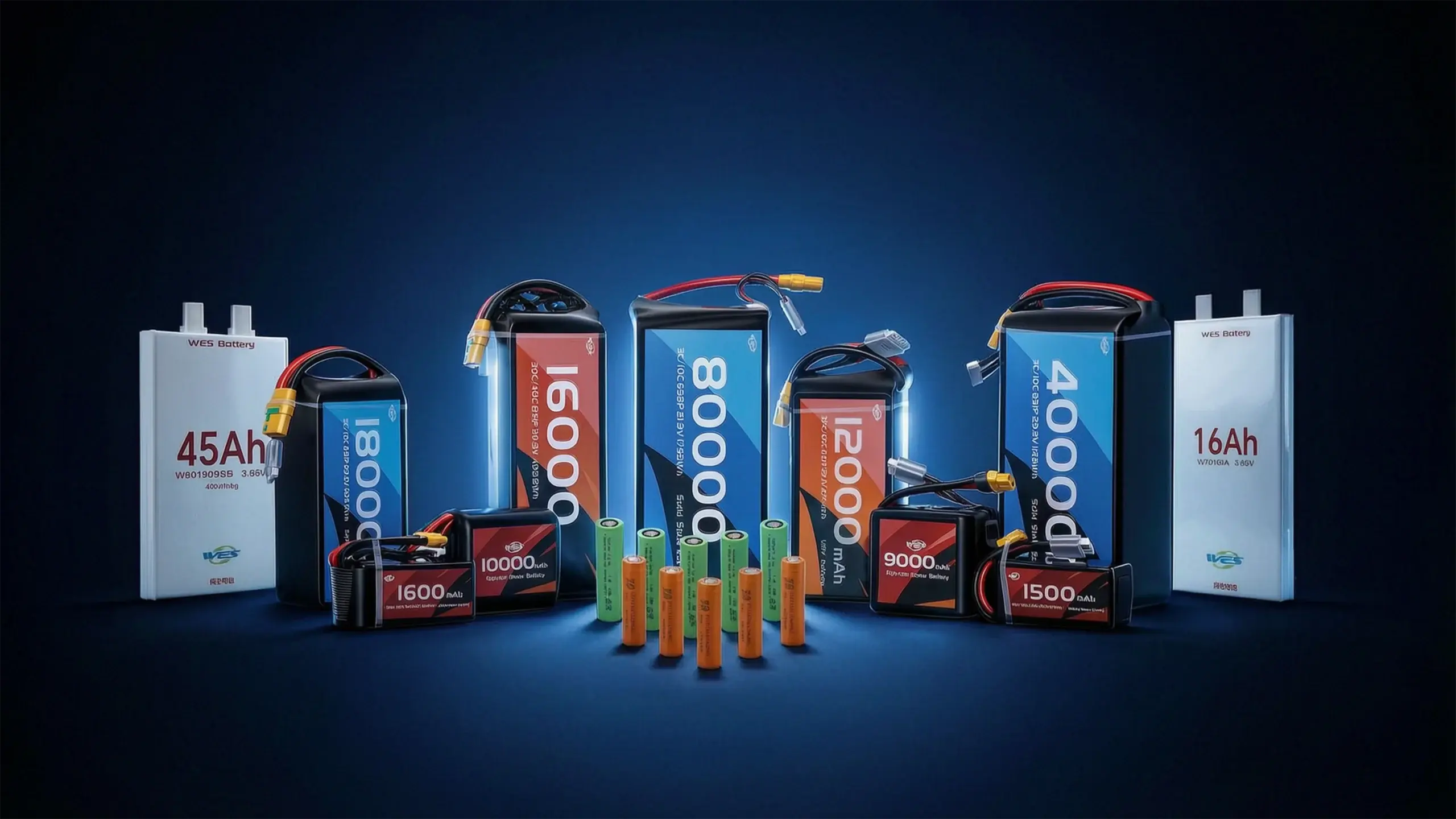 WES drone battery family · 1,500mAh to 80,000mAh
Three chemistries, one decision
The first fork in the road. LiPo, Li-ion, and semi-solid trade off power, energy, safety and cost in predictable ways.
Chemistry at a glance
The short answer: LiPo gives you the most current, Li-ion the most cycles per dollar, and semi-solid the most energy in the least weight with the safest chemistry.
Energy density below is cell-level; finished packs weigh a little more once casing, BMS and connectors are added.
| Chemistry | Energy density | Discharge | Best for |
|---|---|---|---|
| LiPo (pouch) | 180-230 Wh/kg | 50C+ | FPV, high-burst |
| Li-ion (cylindrical) | 200-260 Wh/kg | 2-10C | Survey, mapping |
| Semi-solid state | 350-400 Wh/kg | 3-10C | Heavy-lift, agriculture |
Semi-solid & solid-state
The production-ready frontier: a stable gel or composite electrolyte delivers 350-400 Wh/kg with the safest thermal profile — ideal for heavy-lift and agricultural platforms. WES ships 1,500mAh to 80,000mAh across this family.
High-voltage LiHV
3.85-3.95V/cell cells add ~5-10% usable energy in the same footprint. 4.45V max charge.
Certified & tested
UN38.3, IEC, UL 1642, CE, CB — validated for air, sea and European market entry.
Four numbers that matter
Voltage, capacity, C-rating and energy density. Learn them once, evaluate any datasheet in minutes.
2.1 Voltage — and the LiHV question
| Configuration | LiPo nominal | LiHV nominal | Max charge | Uplift |
|---|---|---|---|---|
| 6S | 22.2V | 23.1V | 26.7V | +4% |
| 14S | 51.8V | 53.9V | 62.3V | +4% |
| 24S | 88.8V | 92.4V | 106.8V | +4% |
Full 1S-6S voltage tables, capacity tiers and temperature derating: LIHV Specifications Guide.
2.2 Capacity — the conversion
2.3 C-Rating — how much current
Under-speccing C-Rating causes voltage sag under load — the drone loses lift at the worst moment and the pack overheats. The most under-specified parameter in drone batteries.
2.4 Energy density & cycle life
| Chemistry | Field cycle life | WES guide reference |
|---|---|---|
| LiPo (pouch) | 200-400 cycles | — |
| Li-ion (cylindrical) | 500-1000 cycles | — |
| Solid-state / semi-solid | 500-800 typical · 1,000+ rated | Specs Guide |
Store at ~50% charge, avoid full discharges, keep below 40°C during charge.
One battery platform, many missions
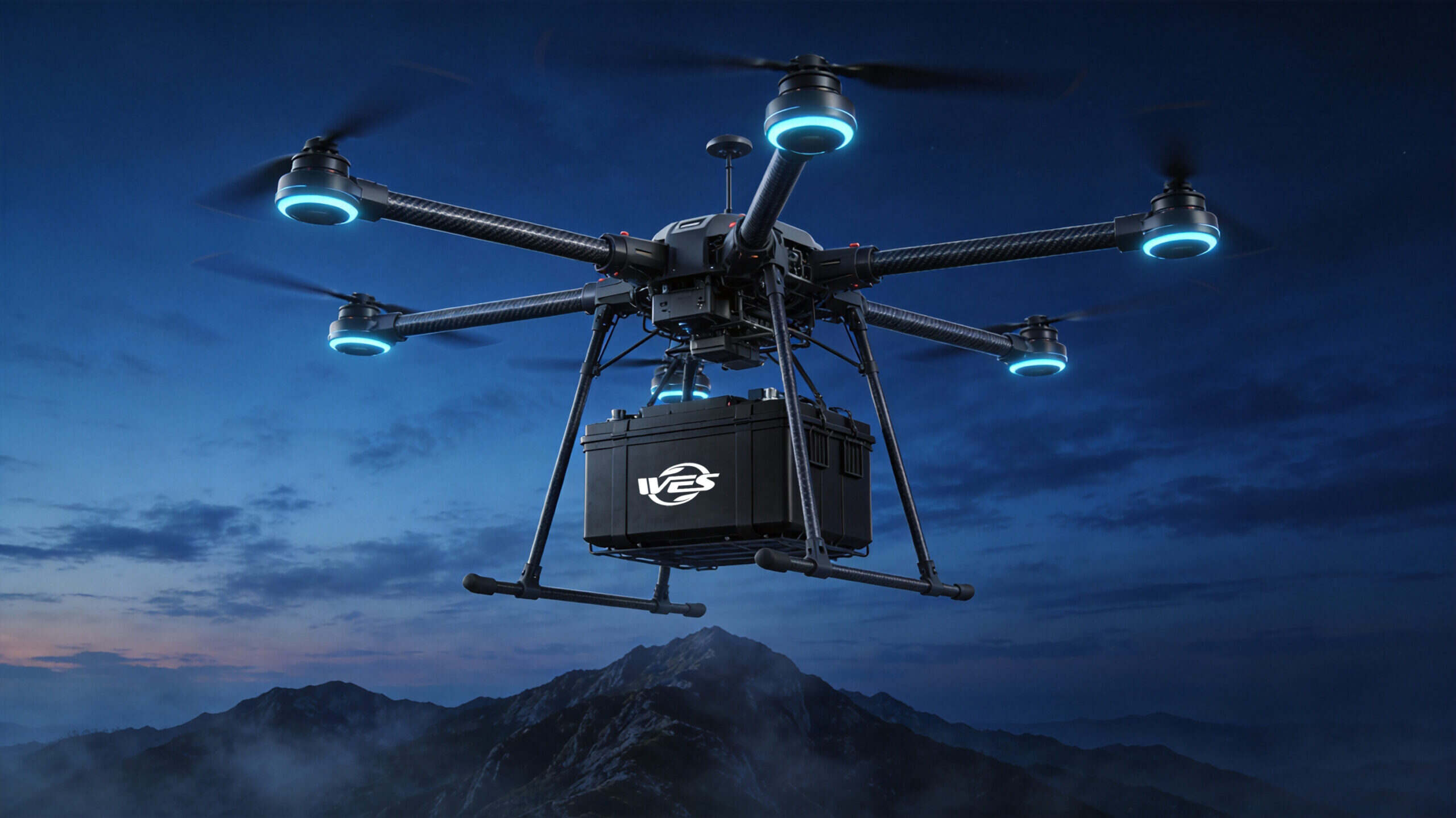
The same chemistry rarely fits an FPV racer and a crop-spraying drone. Match the pack to the mission.
LiPo, max C-rating
High-burst discharge for aggressive maneuvers. 6S high-discharge LiPo packs.
Li-ion / LiHV, endurance
Maximum air time for cameras and LiDAR to cover more area per sortie.
Semi-solid / Li-ion, 14S
Longer spraying cycles with fewer battery swaps in humid field conditions.
The gate you cannot skip
If your drone crosses a border, the battery must carry the right certifications. Non-compliance blocks shipments and exposes you to liability.
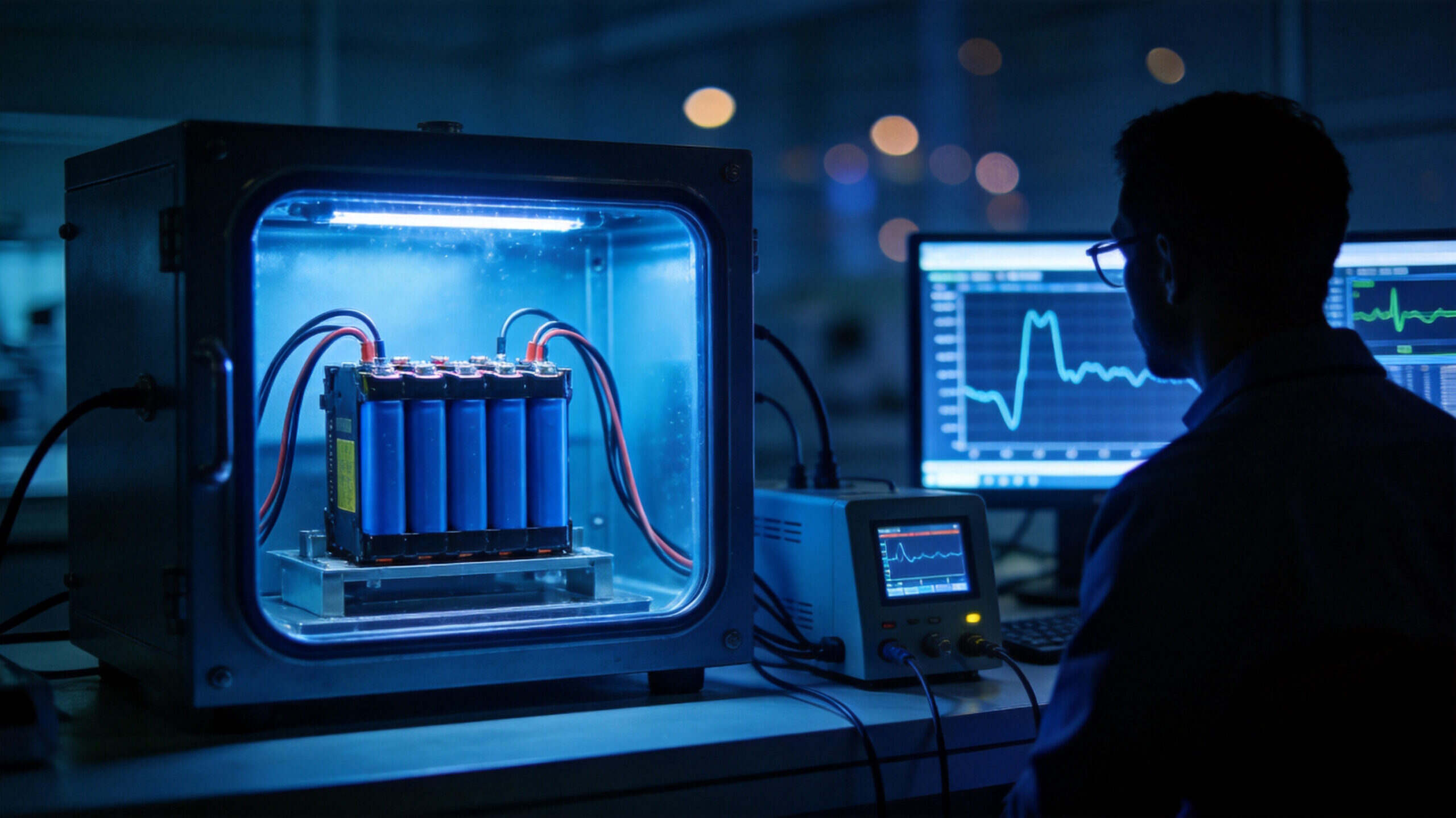
- UN38.3 — transport safety testing
- IEC 61960 / 62133 — performance & safety
- UL 1642 — North America safety
- CE / CB / RoHS — European market access
From spec to mass production
WES is a direct cell-to-pack manufacturer — not a reseller. We control the entire chain, from cell production to final assembly.
Requirement
Mission profile, environment, volume forecast.
Design
Cell selection, pack layout, BMS, thermal strategy.
Prototype
Functional samples for bench and flight testing.
Validate
Cycle life, thermal abuse, vibration, transport testing.
Produce
Tooling, QC, and on-time delivery to your build plan.

Start your custom battery program
Tell us your payload, flight time, operating environment, and target volume. Our engineering team responds with a feasibility assessment and quotation.
Or write to us directly: Info@wesbattery.com
 English
  Chinese