

Lithium-Ion Battery Market Trends 2026: Growth Forecast & B2B Opportunities
ARTICLE CONTENT
Introduction: The Lithium-Ion Battery Revolution is Here
The global lithium-ion battery market stands at an inflection point. What was once a niche technology powering consumer electronics has transformed into a critical infrastructure component driving the global energy transition. In 2026, the lithium-ion battery market is experiencing unprecedented growth, with projections indicating the market will expand from $134.08 billion in 2025 to $865.33 billion by 2034, representing a remarkable compound annual growth rate (CAGR) of 22.85%. This explosive growth reflects fundamental shifts in energy consumption, transportation electrification, and renewable energy adoption across the globe.
For battery manufacturers, OEM/ODM partners, and procurement professionals, understanding these market trends is no longer optional—it is essential for strategic planning and competitive positioning. This comprehensive guide explores the key drivers of lithium-ion battery market growth, emerging opportunities across industries, supply chain dynamics, and strategic recommendations for B2B stakeholders navigating this transformative landscape.
Section 1: Market Size & Growth Projections
The Scale of Growth: From Billions to Trillions
The lithium-ion battery market’s trajectory represents one of the most significant industrial transformations of our era. The market has grown from approximately $68.5 billion in 2025 to an estimated $83 billion in 2026, marking the beginning of an accelerating growth phase. However, these figures only tell part of the story. When examining the broader battery materials market—which encompasses raw materials, components, and finished products—the total addressable market expands to $99.51 billion in 2026, projected to reach $310.8 billion by 2034 at a CAGR of 15.3%.
This growth is driven by several converging factors. First, global lithium-ion battery demand is projected to increase nearly sevenfold between 2022 and 2030, reaching 4.7 terawatt-hours (TWh) by 2030. This represents an unprecedented expansion in production capacity, supply chain complexity, and manufacturing innovation. Second, the volume of lithium-ion battery production is expected to grow from nearly 2,000 GWh in 2025 to approximately 4 times that volume by 2035, indicating a quadrupling of global production capacity within a single decade.
For B2B procurement professionals, these projections signal significant opportunities for strategic partnerships, long-term supply agreements, and capacity expansion planning. Organizations that secure reliable battery supply chains now will gain competitive advantages as demand continues to accelerate.
Regional Market Dynamics
The lithium-ion battery market growth is not uniformly distributed across regions. The United States lithium market alone is projected to grow from $1.28 billion in 2025 to a CAGR of 12.48% through 2034, driven by domestic manufacturing incentives, EV adoption, and energy storage investments. Meanwhile, the global electric vehicle battery market—a critical segment of the lithium-ion battery industry—is projected to grow from $86.52 billion in 2026 to $116.81 billion by 2034 at a CAGR of 3.82%, with some regional markets experiencing growth rates exceeding 9.5%.
This regional variation creates differentiated opportunities for battery suppliers. Manufacturers positioned in high-growth regions with supportive regulatory environments will capture disproportionate market share. Additionally, supply chain localization is becoming increasingly important, with governments incentivizing domestic battery production to reduce dependence on foreign suppliers and strengthen energy security.
Section 2: Key Market Drivers & Industry Trends
2.1 Electric Vehicle Adoption Accelerating Battery Demand
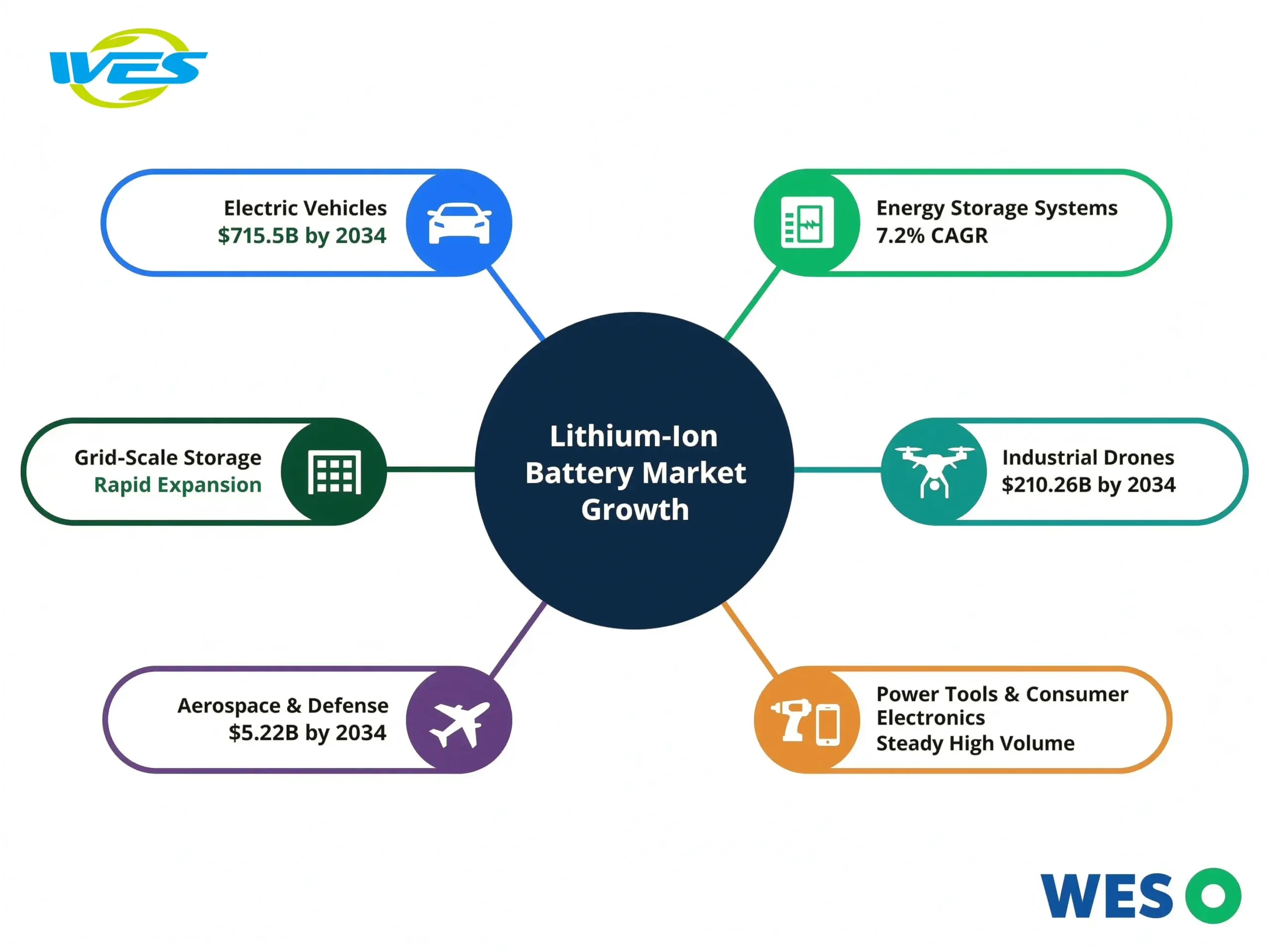
The electric vehicle (EV) revolution remains the primary driver of lithium-ion battery market growth. The U.S. battery electric vehicle market alone was valued at $102.56 billion in 2025 and is projected to increase from $145.29 billion in 2026 to $715.50 billion by 2034—a more than 4.9x increase in less than a decade. This explosive growth reflects the convergence of multiple factors: improving battery technology, declining battery costs, expanding charging infrastructure, and increasingly stringent emissions regulations.
For battery manufacturers and OEM/ODM suppliers, the EV market represents both tremendous opportunity and intense competition. Original equipment manufacturers (OEMs) are consolidating their supplier bases, demanding higher volumes, better pricing, and superior performance specifications. This consolidation creates barriers to entry for smaller suppliers but offers significant scale opportunities for established manufacturers with proven track records and advanced manufacturing capabilities.
2.2 Energy Storage Systems: The Next Frontier
Beyond transportation, energy storage systems (ESS) are emerging as a critical growth segment for lithium-ion batteries. As renewable energy generation (solar and wind) expands globally, the need for grid-scale and distributed energy storage becomes increasingly critical. The portable energy storage market is growing at a CAGR of 7.2% from 2026 to 2033, while grid-scale battery storage is experiencing even more rapid growth in certain regions.
This diversification of end-markets reduces dependence on any single industry and creates resilience in battery supply chains. For procurement professionals, this means expanding supplier relationships beyond traditional automotive channels and identifying opportunities in emerging energy storage applications.
2.3 Battery Technology Evolution: Performance & Safety
The lithium-ion battery market is not static. Significant technological innovations are reshaping the competitive landscape. Semi-solid battery technology, which replaces the liquid electrolyte with a solid or semi-solid material, promises higher energy density, improved safety, and longer cycle life. While still in early commercialization stages, semi-solid batteries are attracting substantial investment from major automotive OEMs and battery manufacturers.
Additionally, high-discharge-rate polymer soft pack batteries are gaining traction in demanding applications such as industrial drones, power tools, and aerospace systems. These batteries deliver discharge rates of 30C to 100C+, enabling rapid power delivery for high-performance applications. The 21700 lithium-ion battery market, a popular format for EV and energy storage applications, is projected to grow from $8,020.39 million in 2025 to $19,792.77 million by 2034—a CAGR of approximately 10.2%.
For battery suppliers, staying ahead of technology curves is essential. Investment in R&D, manufacturing process optimization, and quality control systems will determine competitive positioning in an increasingly technology-driven market.
Section 3: Supply Chain Dynamics & Procurement Challenges
3.1 Raw Material Availability & Cost Pressures
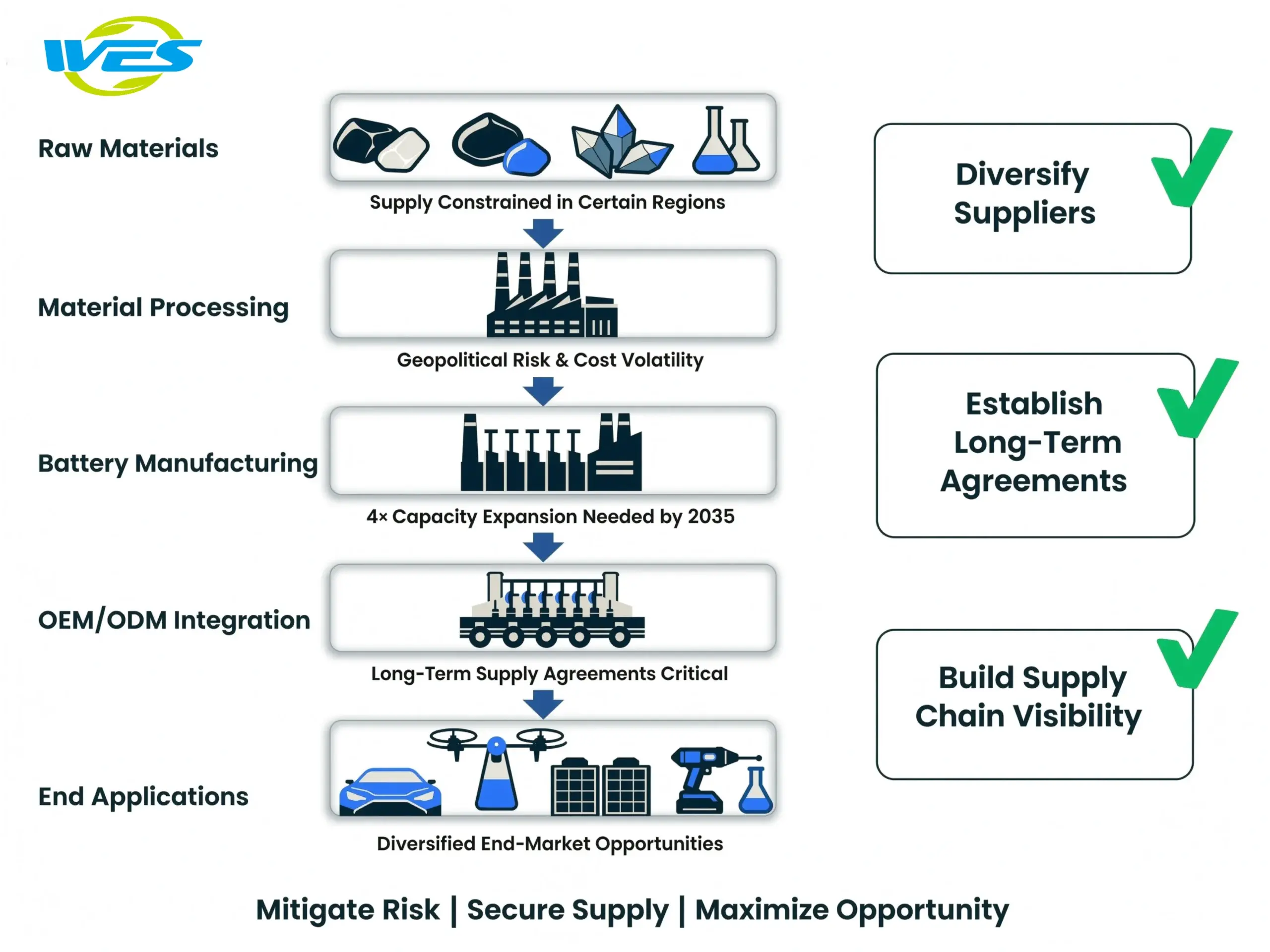
The lithium-ion battery supply chain begins with raw materials: lithium, cobalt, nickel, manganese, and other critical minerals. As battery demand accelerates, securing reliable supplies of these materials has become a strategic priority. Lithium extraction and processing capacity is expanding, but supply constraints remain in certain regions. Additionally, geopolitical factors, environmental regulations, and mining capacity limitations create supply chain vulnerabilities.
For procurement professionals, this means diversifying supplier relationships across multiple geographies, establishing long-term supply agreements, and considering vertical integration strategies for critical materials. Organizations that secure strategic partnerships with lithium miners and material processors will gain competitive advantages in cost stability and supply reliability.
3.2 Manufacturing Capacity Expansion
The projected quadrupling of lithium-ion battery production capacity by 2035 requires massive capital investment in manufacturing facilities. Major battery manufacturers are announcing multi-billion-dollar capacity expansion projects across North America, Europe, and Asia. This expansion creates opportunities for equipment suppliers, facility developers, and specialized manufacturing service providers.
However, capacity expansion also creates risks. Overbuilding in certain regions could lead to excess capacity and pricing pressure. Conversely, underinvestment in high-demand regions could create supply shortages and premium pricing. For OEM/ODM partners, securing battery supply agreements with manufacturers investing in capacity expansion in their target markets is critical.
3.3 Supply Chain Transparency & Compliance
Increasingly, battery supply chains are subject to regulatory scrutiny regarding environmental practices, labor standards, and material sourcing. The European Union’s Battery Regulation and similar regulations in other jurisdictions are requiring enhanced supply chain transparency, recycling compliance, and carbon footprint reporting.
For procurement professionals, this means implementing robust supply chain management systems, conducting supplier audits, and maintaining detailed material traceability documentation. Organizations that establish compliant, transparent supply chains will gain competitive advantages in regulated markets and build stronger relationships with environmentally conscious customers.
Section 4: Market Opportunities for B2B Stakeholders
4.1 Strategic Partnerships & Long-Term Supply Agreements
The lithium-ion battery market’s rapid growth creates opportunities for strategic partnerships between battery manufacturers and OEM/ODM partners. Organizations that establish long-term supply agreements now can secure favorable pricing, priority access to new technologies, and collaborative development opportunities. These partnerships should include provisions for capacity planning, technology roadmaps, and joint innovation initiatives.
4.2 Vertical Integration & In-House Production
Some OEM/ODM partners are considering vertical integration—bringing battery production in-house or establishing joint ventures with battery manufacturers. This approach offers greater control over supply, cost structure, and technology development. However, it requires significant capital investment and manufacturing expertise. Organizations should carefully evaluate the trade-offs between vertical integration and reliance on external suppliers.
4.3 Emerging Applications & Niche Markets
While electric vehicles dominate current battery demand, emerging applications present significant opportunities. Commercial drones, portable energy storage systems, power tools, aerospace applications, and industrial equipment all require specialized battery solutions. Suppliers that develop expertise in these niche markets can command premium pricing and build defensible competitive positions.
4.4 Battery Recycling & Circular Economy
As lithium-ion battery volumes increase, recycling and material recovery become increasingly important. The battery recycling market is growing rapidly, with advanced recycling technologies recovering high-purity materials for reuse. Organizations that develop recycling capabilities or partner with recycling specialists can create new revenue streams and strengthen their sustainability credentials.
Section 5: Challenges & Risk Mitigation Strategies
5.1 Price Volatility & Cost Management
Lithium-ion battery costs have declined dramatically over the past decade, but prices remain volatile due to raw material cost fluctuations and supply chain disruptions. For procurement professionals, this volatility creates challenges in cost forecasting and margin management. Mitigation strategies include hedging raw material costs, establishing price escalation clauses in supply agreements, and investing in cost reduction initiatives.
5.2 Technology Obsolescence Risk
The rapid pace of battery technology innovation creates risk that current battery designs may become obsolete. Organizations should maintain awareness of emerging technologies (semi-solid batteries, sodium-ion batteries, solid-state batteries) and evaluate their potential impact on current product roadmaps. Strategic partnerships with battery manufacturers investing in next-generation technologies can help mitigate this risk.
5.3 Geopolitical Supply Chain Risks
Lithium, cobalt, and other critical battery materials are concentrated in specific geographies, creating geopolitical supply chain risks. Trade disputes, export restrictions, and political instability can disrupt supply chains. Mitigation strategies include geographic diversification of suppliers, strategic material stockpiling, and advocacy for supportive trade policies.
Section 6: Strategic Recommendations for B2B Procurement Professionals
Based on current market trends and projections, we recommend the following strategic actions:
1. Secure Long-Term Supply Agreements: Establish multi-year supply agreements with battery manufacturers, locking in favorable pricing and priority access to capacity. These agreements should include technology roadmap provisions and collaborative development opportunities.
2. Diversify Supplier Relationships: Avoid over-dependence on single suppliers. Establish relationships with multiple battery manufacturers across different geographies to mitigate supply chain risks.
3. Invest in Supply Chain Visibility: Implement advanced supply chain management systems that provide real-time visibility into battery inventory, production schedules, and logistics. This visibility enables better demand forecasting and inventory optimization.
4. Evaluate Technology Roadmaps: Regularly assess emerging battery technologies and their potential impact on your product roadmaps. Maintain relationships with battery manufacturers investing in next-generation technologies.
5. Build Compliance Capabilities: Establish robust systems for supply chain compliance, environmental reporting, and material traceability. This positions your organization for success in increasingly regulated markets.
6. Consider Strategic Partnerships: Evaluate opportunities for joint ventures, technology partnerships, or vertical integration with battery manufacturers. These partnerships can provide competitive advantages in cost, technology, and supply security.
Основные выводы
The lithium-ion battery market is experiencing unprecedented growth, with projections indicating the market will expand from $134.08 billion in 2025 to $865.33 billion by 2034 at a CAGR of 22.85%. This explosive growth is driven by electric vehicle adoption, energy storage expansion, and technological innovation. For B2B procurement professionals, this growth creates significant opportunities for strategic partnerships, supply chain optimization, and emerging market development. However, it also presents challenges including raw material supply constraints, technology obsolescence risk, and geopolitical supply chain vulnerabilities. Organizations that develop robust supply chain strategies, maintain technology awareness, and establish strategic partnerships will thrive in this transformative market.
Related Resources
Core Pillar Pages:
Spoke Pages:
External Resources:
-Polaris Market Research: U.S. Lithium Market Analysis
-Market Research Future: Grid Scale Battery Market Report