

LIHV Applications: 5 Industries + 8-10% Performance Boost
Published: June 15, 2026
Last Updated: June 22, 2026
Reading Time: 8 minutes
Introduction
LIHV batteries have revolutionized numerous industries by delivering superior performance, extended endurance, and reliable power in demanding environments. From competitive racing to commercial operations, advanced battery technology enables capabilities previously impossible with standard LiPo solutions. This comprehensive guide explores five major industries where high-voltage battery technology is making a significant impact, delivering 8-10% performance improvements across multiple sectors.
Key Benefits of Advanced Battery Technology:
•8-10% increased power output for racing and heavy-lift operations
•10-15% extended endurance for long-range and precision farming
•Superior voltage stability across all demanding applications
•Thermal management advantages in high-stress conditions
1. FPV Racing Drones: The Ultimate Performance Application
Understanding Racing Drone Battery Requirements
FPV (First-Person View) racing represents one of the most demanding applications for drone battery technology. Professional racing pilots fly at speeds exceeding 160 km/h (100 mph), performing aggressive maneuvers that require maximum power output and responsive acceleration. In this competitive environment, racing batteries must deliver consistent, predictable performance.
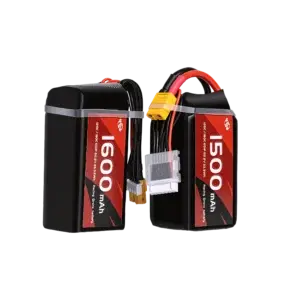
Why LIHV Racing Batteries Outperform Standard Batteries
Performance Edge: LIHV racing batteries deliver 8-10% more power than standard LiPo batteries, translating into faster speeds and quicker acceleration. In competitive FPV racing where margins are measured in milliseconds, this performance advantage is often decisive.
Voltage Stability: Superior voltage stability under extreme load ensures consistent throttle response during intense maneuvers. Racing pilots demand predictable, responsive performance, and LIHV racing batteries deliver exactly that.
Reduced Voltage Sag: LIHV batteries exhibit 30-40% less voltage sag than standard LiPo batteries, maintaining more stable power delivery throughout the flight. This characteristic is critical for maintaining performance during sustained high-speed racing operations.
Typical FPV Racing Battery Configuration
|
Specification
|
Value
|
|
Battery Type
|
4S LIHV
|
|
Capacity
|
550-650mAh
|
|
Discharge Rate
|
100-150C
|
|
Weight
|
29-32g
|
|
Flight Time
|
3-5 minutes
|
|
Peak Power
|
1,500-2,000W
|
|
Performance Gain
|
8-10% vs LiPo
|
Professional Racing Success with LIHV Racing Batteries
Professional racing teams exclusively use LIHV racing batteries, recognizing that the performance advantage justifies the higher cost. Top racing pilots report 5-8% improvement in lap times when switching from standard LiPo to LIHV racing batteries. This performance boost often translates into winning races and earning prize money that far exceeds the battery cost premium.
2. Long-Range Drone Operations: Extended Endurance Applications
Agricultural Battery Operations
Commercial drone operators conducting long-range missions prioritize extended flight time and energy efficiency. LIHV applications in long-range operations enable significantly longer flights without adding weight, making them ideal for commercial drone battery solutions.

LIHV Advantages in Long-Range Drone Battery Applications
Extended Endurance: LIHV applications deliver 6-8% more total energy compared to equivalent LiPo batteries, directly translating into longer flight times. A drone equipped with LIHV applications can cover more area per flight, reducing operational costs.
Improved Efficiency: Higher energy density in LIHV applications means more energy per unit of weight, enabling longer flights with lighter battery packs. This efficiency advantage is particularly valuable for commercial drone operations covering large areas.
Consistent Power Delivery: Superior voltage stability in LIHV applications ensures consistent performance throughout the flight, enabling more accurate flight planning and mission execution for long-range drone operations.
Typical Long-Range Drone Battery Configuration
|
Specification
|
Value
|
|
Battery Type
|
6S LIHV
|
|
Capacity
|
5000-10000mAh
|
|
Discharge Rate
|
50-75C
|
|
Weight
|
580-1200g
|
|
Flight Time
|
25-45 minutes
|
|
Range
|
15-25 km
|
|
Performance Gain
|
10-15% endurance
|
Real-World Performance Improvement in Long-Range Operations
Operators report 10-15% longer flight times when upgrading from standard LiPo to LIHV applications for long-range drone operations. For large-scale commercial operations covering hundreds of acres, this endurance improvement translates into significant cost savings through reduced battery changes and increased productivity.
3. Heavy-Lift Industrial Operations: Maximum Power Solutions
Industrial Power Requirements
Heavy-lift drones carrying payloads of 5-50 kg require maximum power output and reliable performance under sustained high-load conditions. Advanced battery technology delivers the power and thermal stability necessary for these demanding operations.
Advantages of High-Voltage Technology in Heavy-Lift Operations
Maximum Power Output: LIHV technology delivers 8-10% more power than standard batteries, enabling heavier payloads and faster lift rates. This power advantage directly impacts operational capability.
Thermal Stability: Advanced batteries generate less heat during discharge, maintaining stable performance under continuous high-load conditions. This thermal advantage extends battery lifespan and improves safety.
Voltage Stability: Superior voltage stability ensures consistent lift capacity throughout the flight, preventing performance degradation as the battery discharges.
Typical Heavy-Lift Configuration
|
Specification
|
Value
|
|
Battery Type
|
6S LIHV
|
|
Capacity
|
10000-15000mAh
|
|
Discharge Rate
|
75-100C
|
|
Weight
|
1000-1500g
|
|
Peak Power
|
5000-10000W
|
|
Payload Capacity
|
10-50 kg
|
|
Performance Gain
|
8-10% power
|
Industrial Use Cases
Inspection Operations: Advanced battery technology enables industrial drones to carry heavy inspection equipment to difficult-to-reach locations, improving safety and efficiency.
Delivery Operations: High-voltage solutions provide the power necessary for cargo drones to carry meaningful payloads over extended distances.
Construction & Surveying: Advanced batteries enable drones to carry surveying equipment and cameras for large-scale mapping and inspection projects.
4. Precision Agriculture: Crop Management Solutions
Modern Farming Requirements
Modern agriculture increasingly relies on drone technology for crop health monitoring, targeted pesticide application, and field mapping. Advanced battery technology enables longer flights and more efficient farming operations.
Advantages of High-Voltage Technology in Precision Farming
Extended Flight Duration: Advanced batteries enable longer flight times, allowing operators to cover more area per flight and complete missions more efficiently.
Improved Efficiency: Higher energy density enables lighter battery packs, improving drone agility and reducing power requirements.
Consistent Performance: Superior voltage stability ensures consistent spray patterns and flight characteristics throughout farming missions.
Typical Precision Farming Configuration
|
Specification
|
Value
|
|
Battery Type
|
4S-6S LIHV
|
|
Capacity
|
5000-10000mAh
|
|
Discharge Rate
|
50-75C
|
|
Flight Time
|
20-35 minutes
|
|
Spray Coverage
|
20-40 acres per flight
|
|
Performance Gain
|
10-15% coverage
|
Farming Benefits
Cost Reduction: Longer flight times reduce the number of battery changes required during a workday, improving productivity and reducing operational costs.
Operational Efficiency: Extended endurance enables operators to complete larger areas in a single flight, improving overall efficiency.
Precision Application: Consistent power delivery enables more precise pesticide application, reducing chemical usage and environmental impact.
5. Emergency Response: Critical Mission Support
Emergency Operations Requirements
Emergency response teams operating drones for search and rescue, disaster assessment, or supply delivery depend on reliable, high-performance batteries where performance cannot be compromised. Advanced battery technology provides critical support for emergency operations.
Advantages of High-Voltage Technology in Emergency Response
Reliable Performance: LIHV technology delivers consistent power and performance when it matters most, ensuring mission success in critical situations.
Extended Flight Duration: Longer flight times enable more thorough search operations and extended coverage areas.
Thermal Stability: Superior thermal management ensures reliable operation under demanding conditions.
Typical Emergency Response Configuration
|
Specification
|
Value
|
|
Battery Type
|
4S-6S LIHV
|
|
Capacity
|
5000-10000mAh
|
|
Discharge Rate
|
75-100C
|
|
Flight Time
|
20-40 minutes
|
|
Payload
|
Thermal cameras, communication equipment
|
|
Performance Gain
|
8-10% capability
|
Emergency Applications
Search & Rescue: Extended flight duration enables thorough search operations over larger areas, improving rescue success rates.
Disaster Assessment: Advanced battery technology enables rapid damage assessment after natural disasters, supporting emergency response planning.
Supply Delivery: High-voltage solutions provide the power necessary to deliver emergency supplies to affected areas.
Performance Comparison: Advanced Battery Technology Across 5 Industries
Industry Performance Metrics
|
Industry
|
Power Needs
|
Endurance Needs
|
Performance Gain
|
ROI
|
|
Racing
|
Maximum
|
Moderate
|
8-10% speed
|
Very High
|
|
Long-Range
|
Moderate
|
Maximum
|
10-15% endurance
|
Very High
|
|
Heavy-Lift
|
Maximum
|
Moderate
|
8-10% payload
|
Very High
|
|
Precision Farming
|
Moderate
|
High
|
10-15% coverage
|
High
|
|
Emergency Response
|
High
|
High
|
8-10% capability
|
Very High
|
Selecting the Right Battery for Your Industry
Industry-Specific Selection Guide
For Competitive Racing:
•Prioritize discharge rate (100C+)
•Select lightweight options
•Use 4S configuration
•Capacity: 550-650mAh
•Focus: Maximum power output
For Long-Range Commercial Operations:
•Prioritize energy density
•Select higher capacity options
•Use 6S configuration
•Capacity: 5000-10000mAh
•Focus: Extended flight time
For Heavy-Lift Industrial Work:
•Prioritize power output
•Select high discharge rate options (75-100C)
•Use 6S configuration
•Capacity: 10000-15000mAh
•Focus: Maximum payload capacity
For Precision Farming Operations:
•Balance power and endurance
•Select 4S-6S configuration
•Capacity: 5000-10000mAh
•Discharge rate: 50-75C
•Focus: Extended coverage area
For Emergency Response Operations:
•Prioritize reliability and consistency
•Select proven designs
•Use 4S-6S configuration
•Capacity: 5000-10000mAh
•Focus: Mission-critical performance
Cost-Benefit Analysis: ROI Across Industries
ROI Calculation Framework
Performance Value: Quantify the value of advanced battery performance
•Racing: Potential prize money or competitive advantage
•Commercial: Increased productivity or coverage area
•Emergency: Mission success value
Operational Cost: Calculate cost per flight or operation
•Advanced Battery Cost: $65-100 per unit
•Standard Battery Cost: $50-75 per unit
•Premium: 15-25%
Lifespan Considerations: Account for battery lifecycle
•Advanced Batteries: 250-400 cycles
•Standard Batteries: 300-500 cycles
•Difference: 20-30% shorter lifespan
Total Cost of Ownership: Calculate long-term costs
•Advanced: Higher upfront cost, shorter lifespan
•Standard: Lower upfront cost, longer lifespan
•Break-even point: Industry-dependent
ROI by Industry
Very High ROI Industries:
•Racing: Performance advantage directly impacts competition results
•Emergency Response: Mission success value exceeds battery cost
•Commercial Operations: Productivity gains exceed battery cost premium
High ROI Industries:
•Long-Range Operations: Endurance gains improve efficiency
•Precision Farming: Coverage improvements reduce operational costs
•Heavy-Lift Operations: Power gains enable new capabilities
Moderate ROI Industries:
•Hobbyist Applications: Performance advantage not critical
•Budget-Conscious Operations: Cost premium not justified
•Training & Education: Performance not critical
Future Applications & Emerging Trends
Emerging Industry Opportunities
Autonomous Delivery: Advanced battery technology enables longer-range autonomous delivery drones, supporting the growing delivery economy.
Urban Air Mobility: High-voltage solutions are critical for electric vertical takeoff and landing (eVTOL) aircraft development.
Renewable Energy Storage: Advanced batteries are being explored for grid-scale energy storage applications.
Advanced Robotics: LIHV technology enables more capable and autonomous robotic systems.
Conclusion: Advanced Battery Technology Drives Results
LIHV technology is transforming five major industries by delivering 8-10% performance improvements, extended endurance, and reliable power in demanding environments. Whether you’re competing in racing, conducting commercial operations, managing precision farming, responding to emergencies, or operating heavy-lift equipment, advanced battery technology provides the performance advantage necessary for success.
The key to maximizing battery technology value is selecting the right configuration for your specific industry and understanding the trade-offs between performance and cost.
Ready to Upgrade Your Battery Technology?
Explore Related Guides:
•Complete Guide to LIHV Battery Technology – Comprehensive overview
•LIHV Battery Specifications – Technical reference
•LIHV Battery Charging Guide – Charging procedures and safety
Contact WES Battery for Expert Guidance:
Our specialists can help you select the perfect battery solution for your industry.
•Email: info@wesbattery.com
•Phone: +86 133 526 13095
•Website: https://wesbattery.com/
 English
  Chinese